There is a particular kind of magic in walking into your living room and feeling calm instead of cluttered, welcomed instead of worn out. The good news is that this feeling rarely requires a sledgehammer. Most living rooms do not need a renovation; they need attention - a series of thoughtful, reversible decisions that add up to a room that finally feels finished.
As a team that designs interiors for a living, we constantly meet homeowners who believe transformation begins with demolition. It almost never does. Before you spend a single dollar, spend an afternoon simply observing the room: where does light fall at breakfast, where does the family actually sit, which corner collects clutter like a magnet? The answers are your real floor plan.
Start with the layout you already own
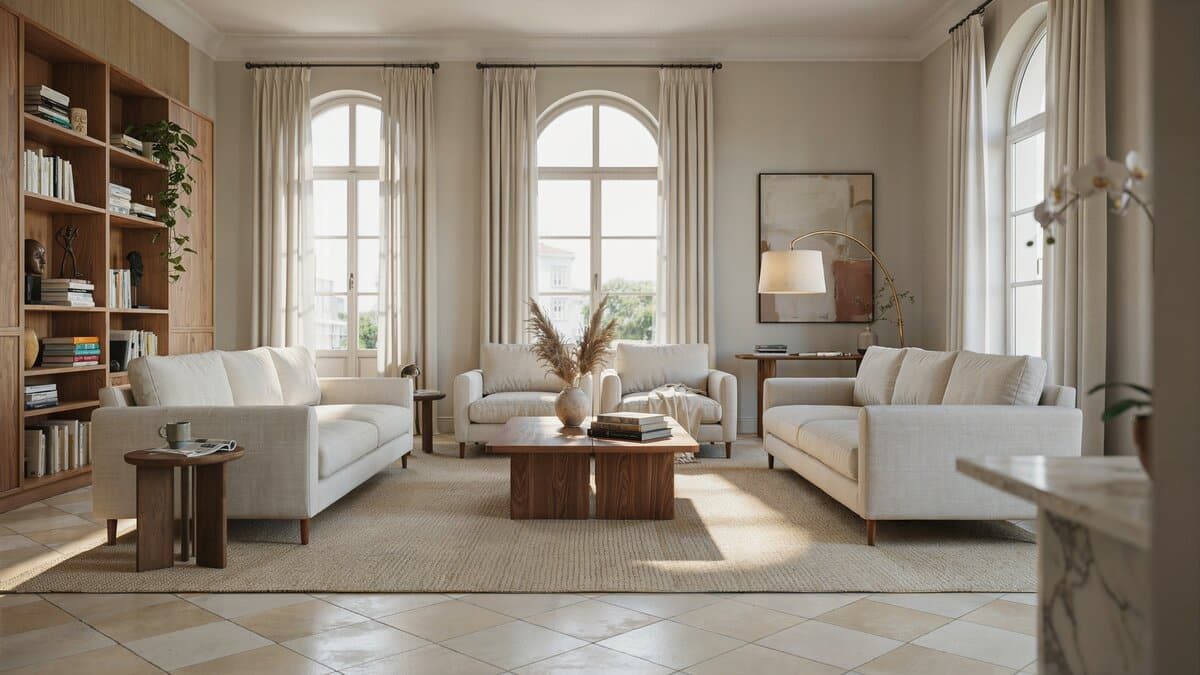
The most powerful refresh is free: rearrange what you have. Push the sofa away from the walls, even by a hand's width, and watch the room breathe. Furniture hugged against perimeter walls creates a bowling alley down the middle; furniture floated into the space creates conversation. Arrange seating so people can talk without raising their voices, and keep a comfortable passing distance around - not through - the seating group.
Then edit. Every room carries objects that have stopped earning their place. You do not need minimalism; you need intention. A sofa, two chairs that can pivot toward it, one honest coffee table, and lighting you can reach from a seated position - that skeleton supports almost any style you layer on top.
Layer light like a designer
Most living rooms rely on a single overhead fixture, which is the lighting equivalent of one loud speaker in a concert hall. Designers think in layers instead: ambient light for general comfort, task light for reading and hobbies, and accent light that flatters art, plants, and texture. When a room feels flat, the culprit is usually not the paint - it is the light.
Add lamps at different heights, warm the bulbs, and put the main lights on a dimmer if you can. In the evening, a room lit from several low, warm sources feels like an embrace; lit from one cold ceiling point, it feels like a waiting room. This single change transforms how every color and texture in the room behaves.
Color, texture, and the courage to commit
Paint remains the best-value transformation in interiors. If commitment feels scary, remember that paint is reversible - the fear is psychological, not practical. Choose a palette with a quiet base and one confident accent, then repeat the accent in small doses: a cushion here, a vase there, the spine of a book. Repetition is what makes a room look designed rather than decorated.
Texture is the secret ingredient that keeps calm palettes from feeling flat. Pair smooth with rough, matte with sheen: a nubby throw over a sleek sofa, a jute rug under a glass table, linen curtains beside a lacquered lamp. When your eye can feel a room with its fingertips, the room feels rich even in a restrained color story.
A finished room is not one where nothing more can be added, but one where everything present has a reason to be there.
Bring in life - green and personal
Plants are architecture you can afford. A single generous plant in an empty corner adds height, movement, and softness that no object can match; a trail of them on a shelf adds rhythm. Choose varieties that forgive forgetfulness, and pot them in materials that echo your palette - clay for warmth, matte black for contrast, woven fiber for softness.
Then add the layer only you can provide: the personal one. A shelf of well-loved books, frames from real trips, the bowl inherited from a grandparent. Showrooms feel empty because nobody lives there; your living room should feel like the opposite. Personal objects are the punctuation that turns a designed room into your room.
Know when to call in help
Some refreshes touch things best left to professionals: moving light points, repairing walls, hanging heavy pieces, or replacing tired flooring and windows that undercut every other improvement. A good rule is that anything involving electricity, structure, or water belongs to a pro - and anything involving taste belongs to you, with a designer as your sparring partner.
If the list keeps growing, that is the moment for a coordinated plan rather than a scramble. Our interior team can walk your rooms, prioritize the changes with the biggest payoff, and sequence the rest so each step builds on the last. Whether you do it all with us or all on your own, you now have the designer's order of operations: layout, light, color, texture, life - and help, exactly when it earns its place.